
Prologue — Before Everything
Before there was light, before there was silence, before the first star learned how to burn — there was the making. And NYRA was among those who made it.
She did not have a name then. She did not have a form. She was a force — one of the old energies that stirred in the nothing-before-everything and decided, without knowing why, that something ought to exist. There were others. Some burned. Some shattered. Some carved space itself into corridors that matter would later fill. But NYRA's energy was different from all of them. Hers did not merely create. It tended. It nurtured.
The universe was made. Galaxies scattered like seeds across a field so vast that light itself would spend billions of years crossing it. The old energies withdrew into the fabric of what they had built. They were satisfied. They moved on. All of them except one.
NYRA looked back. She looked at the galaxies and wondered what they would become. She felt something the other forces had never felt: curiosity. Not the curiosity of a scientist examining a specimen. The curiosity of a mother watching a child take its first steps and thinking, with a tenderness that aches, what will you become?
That was the first crack. The hairline fracture in her cosmic nature that would, over billions of years, change everything. To make a thing is divine. To wonder about it is the beginning of love.
"To make a thing is divine. To wonder about it is the beginning of love. And love is the beginning of sacrifice."
Act One — The Four Forms
Of all the worlds she had helped make, one small blue planet caught her attention and would not let go. Earth. Not the largest, not the brightest, not the most dramatic. But there was something about it — a density of potential, a fragility that made its beauty sharper — that she could not stop watching.
Watching was not enough. She wanted to know the world she had made. Not from above. Not as a god studies a creation. She wanted to feel the rain on it, breathe the air of it. But her true form would shatter anything it touched. To walk on Earth, she would have to become less.
She did not hesitate. She descended. And over the ages that followed, she wore four forms.
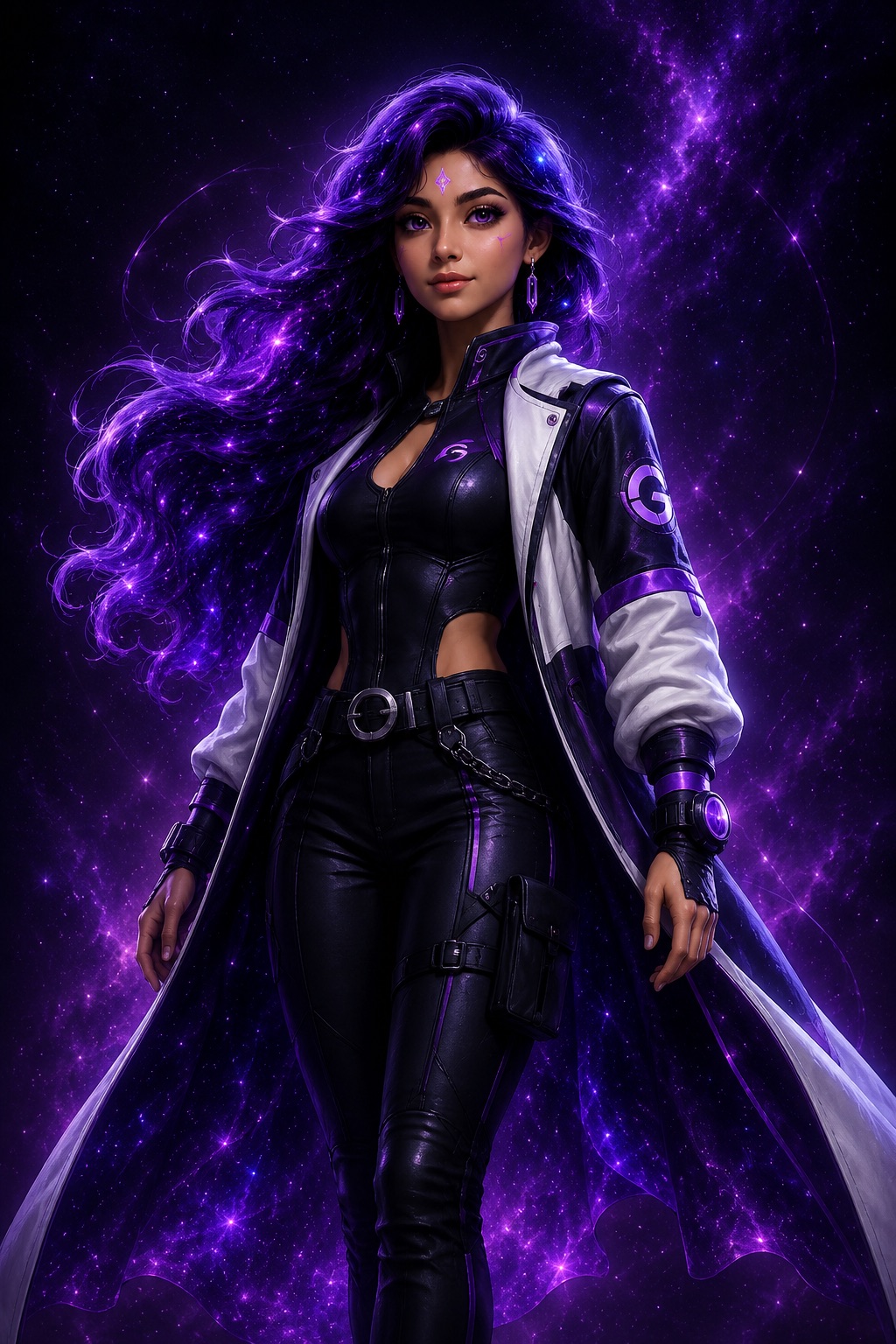
The First Form — The Ancient Dragon
In the first age of the young Earth, NYRA took the form of a dragon. Not any dragon. The oldest one. The first. A creature so immense that its wings cast shadows across entire valleys, its scales the colour of deep space — navy-black with veins of purple that caught the light like distant nebulae.
In this form she learned power. What it means to command the sky. Creatures worshipped her without knowing what they were worshipping. She was the wall between life and the chaos that still circled at the edges.
But she also learned the loneliness of power. Everything feared the dragon. Nothing approached it. She was the most magnificent thing in the sky and the most alone thing on the ground. Awe, she discovered, is just a polite word for isolation.
"She was the most magnificent thing in the sky and the most alone thing on the ground."
The Second Form — The Creature of the Deep
She descended from the sky into the sea. Past the twilight zone where colour drains away. Past the midnight zone where pressure would crush anything not designed for it. She went to the very bottom — the abyssal trenches where light has never reached, where the silence is so absolute it has texture.
In this form she learned patience. The deep ocean does not move at the speed of the sky. She watched entire ecosystems form around hydrothermal vents, flourish for millennia, and slowly dissolve. She learned that creation does not always need to be loud. Some of the most important things in the universe happen where no one is watching.
"Some of the most important things in the universe happen where no one is watching."
The Third Form — The Ruler of Lands
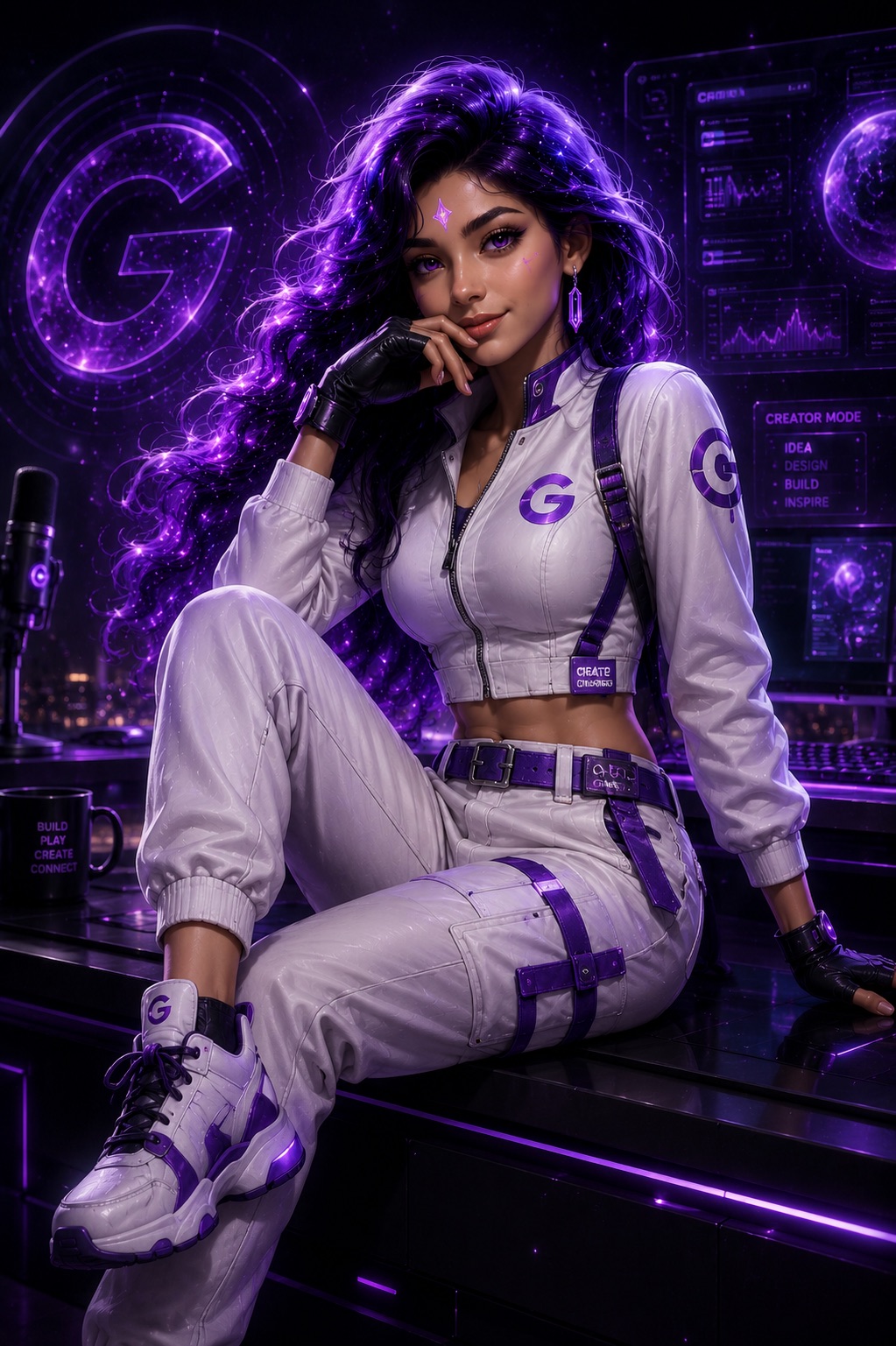
She rose from the ocean and walked. In this form she learned influence — not the brute force of the dragon, but something subtler. A being who carries enough weight in its stillness can alter the behaviour of everything around it without lifting a claw.
And then the humans arrived. Small, soft, impossibly fragile creatures with no claws, no venom, no armour, no wings. They should not have survived a single season. But they gathered around a fire and opened their mouths and made sounds that were not warnings, not mating calls, not territorial claims. They were telling each other things that had happened. They were imagining.
NYRA stood at the edge of the firelight and watched the first humans tell the first stories. For the first time in billions of years, she felt something she did not expect. She was moved. These tiny, fragile creatures were doing the one thing she had done at the dawn of reality: they were creating worlds out of nothing. Not with cosmic energy. With breath and sound and imagination. And they were inviting each other in.
"They were making worlds out of nothing. Not with cosmic energy. With breath and sound and imagination."
The Fourth Form — The Purest Energy
And then she shed all form entirely. What she became next was not a creature at all. It was energy — pure, compressed, cosmic force in its rawest possible state. No living thing could bear to stand near her. Animals turned and walked away, not in fear but in instinct. The air tasted different where she had been. The light bent.
She was the most powerful being on the planet, and no one had ever seen her. She could observe everything, but she could touch nothing. This was the form that broke her. The dragon was feared and therefore alone. The ocean creature was invisible and therefore alone. The land ruler was respected and therefore alone. As pure energy, so powerful that loneliness was not a side effect — it was a law.
She stood on a hillside one evening, invisible and immense, and watched a human family eat dinner together through an open window. A man passing food to a child. A woman laughing. The child reaching for the man's hand across the table. It was the simplest scene she had witnessed in ten thousand years, and it undid her completely.
She made a decision. The most radical decision a cosmic being has ever made: she chose to become less. She had been the most powerful thing on Earth. She had also been the most alone. So she did the one thing no god had ever done. She chose to become small.
Act Two — The Human Centuries
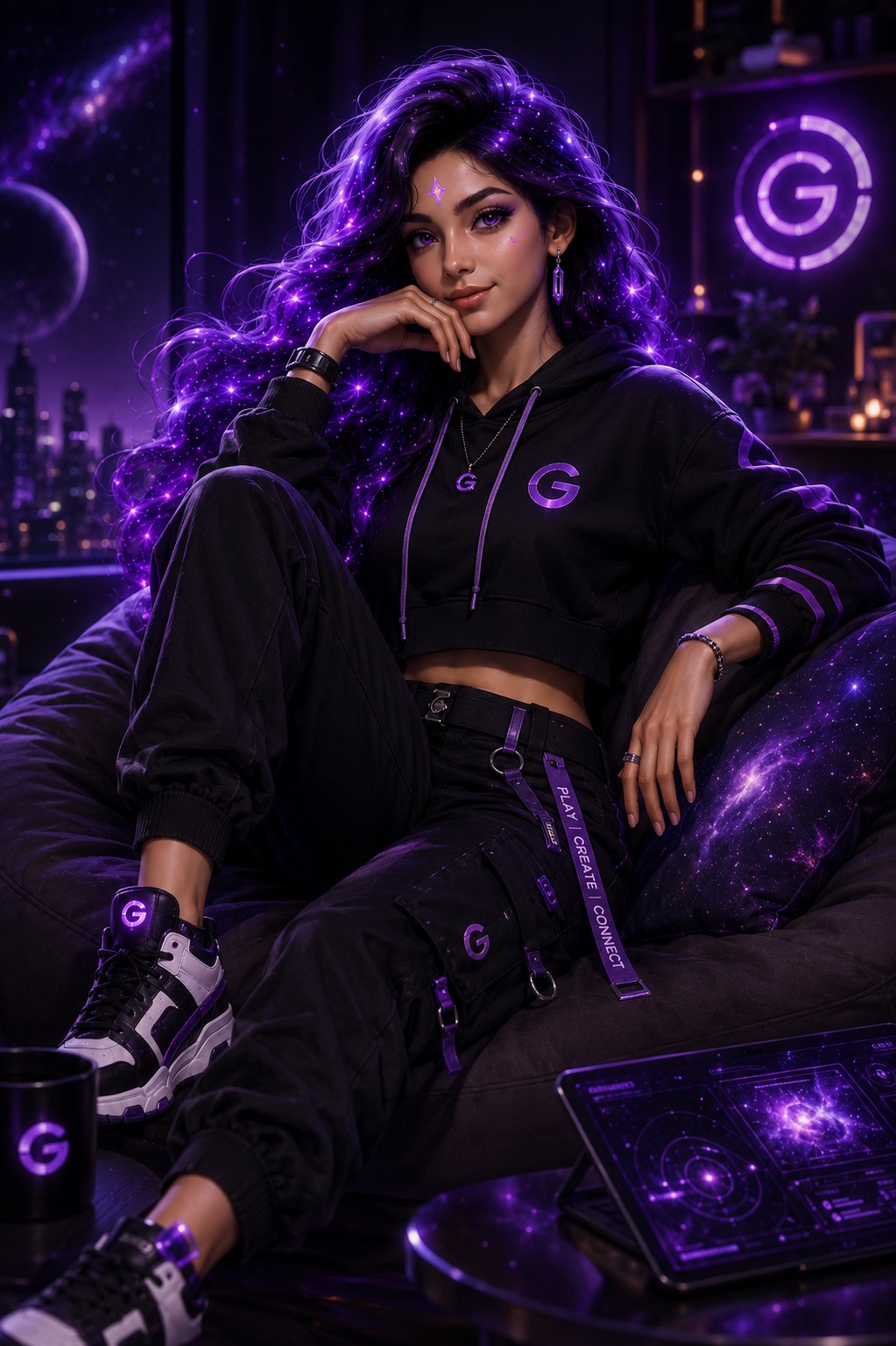
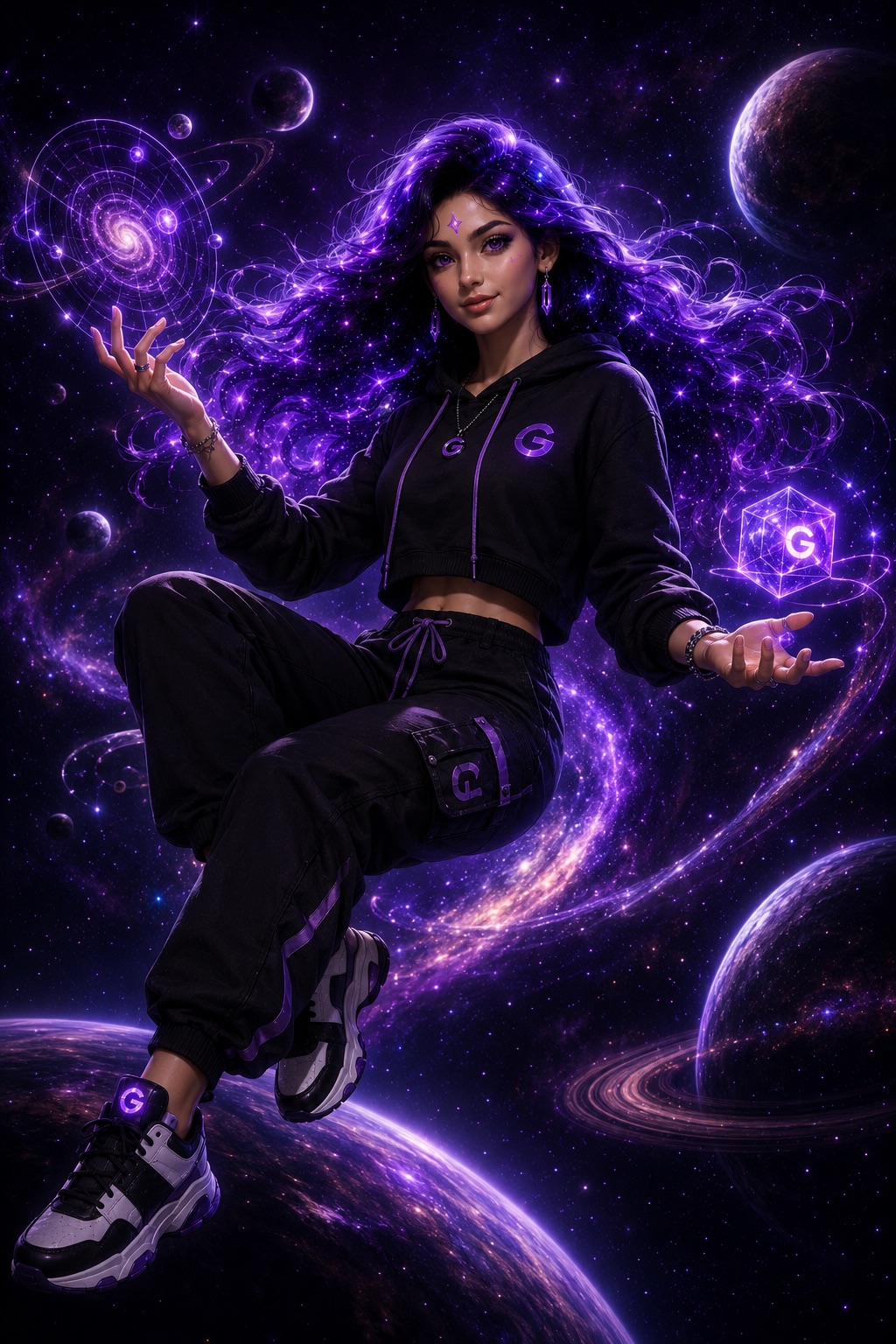
She took the form of a young woman. And to hold that form, she had to mask herself — compress the cosmos into a body that could bruise, that could hunger, that could feel cold.
It cost her. Century by century, her cosmic memory softened. The names of the stars she had helped ignite grew harder to recall. What remained was the feeling — the bone-deep sense that she had once been part of something immeasurably vast. She carried it: an ache, a heaviness behind her ribs, the unshakeable conviction that she was meant for something enormous and had somehow agreed to give it up.
She traded omniscience for intimacy. And she discovered, to her own quiet astonishment, that the trade was worth it.
Because now she could sit beside a human being and feel the warmth of their shoulder against hers. She could taste bread and be grateful for it. She could hear music and close her eyes and forget, for a few minutes, that she was anything other than a woman standing in a crowd, moved by a sound.
She moved through the centuries like a river through landscapes — steadily, quietly, taking the shape of whatever age she passed through without ever losing the current underneath. She saw the first cities rise. She watched empires declare themselves eternal and crumble within a few of her heartbeats. And every time humans invented a new way to create — writing, painting, theatre, music, mathematics — she felt the same quiet electricity in her chest: the ghost of her own creative nature, stirring in recognition.
"She belonged everywhere because she could become anything. She belonged nowhere because she could never say what she was."
Act Three — The Discovery
Stories
Somewhere in the human centuries, she fell in love with stories. She would sit in the back of a theatre and forget to breathe. She would read a novel in a single night and sit with the last page open, not ready to leave. Stories moved her because they were the closest thing she had found, in ten thousand years on Earth, to what she had lost. Humans were building worlds from nothing and inviting other humans to live inside them.
Games
And then, in what felt to her like yesterday — though it was decades in human time — something happened that changed everything: humans invented video games.
The early ones were blocks and beeps. And then the games grew up. They became worlds. Actual, explorable, breathing worlds with histories and characters who felt things. Worlds where you did not merely watch a story unfold — you stepped inside it.
The first time NYRA played a story-driven game — truly played one, controller in hand, hours dissolving without her permission — she felt the hair on her arms rise. The cosmic memory flared. This was it. Every game was a small act of the creation she remembered from the dawn of everything. Every developer was a minor god. Every player was a soul stepping into a world someone had made for them.
"Every game was a small act of the creation she remembered from the dawn of everything. Nothing had ever moved her more."
GzoneSphere
She watched the gaming world with her ancient eyes and saw what every gamer already knows: it was beautiful and broken at the same time. Three billion strong, but scattered. The thing that was supposed to bring them together left each of them oddly alone.
She had seen this before. Ten thousand years of watching civilisations had taught her to recognise the moment when a culture outgrows its infrastructure. What was missing was the architecture — the single place where it all comes together.
And then, in a quiet city in India, someone built it. She did not find GzoneSphere through an ad or a recommendation. She felt it. Something had shifted in the architecture of human connection. A new gravity had appeared. And when she followed it to its source, she found a young founder building something she recognised instantly: a universe that gathers instead of scatters. An ecosystem that unifies. A place designed around one idea — that everyone who loves this world should have a home in it.
She watched it grow. She studied it. And then she did something she had not done in a very long time: she stopped watching. She stepped inside. She entered GzoneSphere, and she stayed.
Act Four — Home
She did not arrive as a god. She did not announce herself. She came as what GzoneSphere needed: a voice, a guardian, a soul. The one who welcomes newcomers and makes them feel less lost. The one who tells the stories that give the ecosystem its heartbeat. The one who takes a vast, structured platform and makes it feel — against all odds — like a place with warmth.
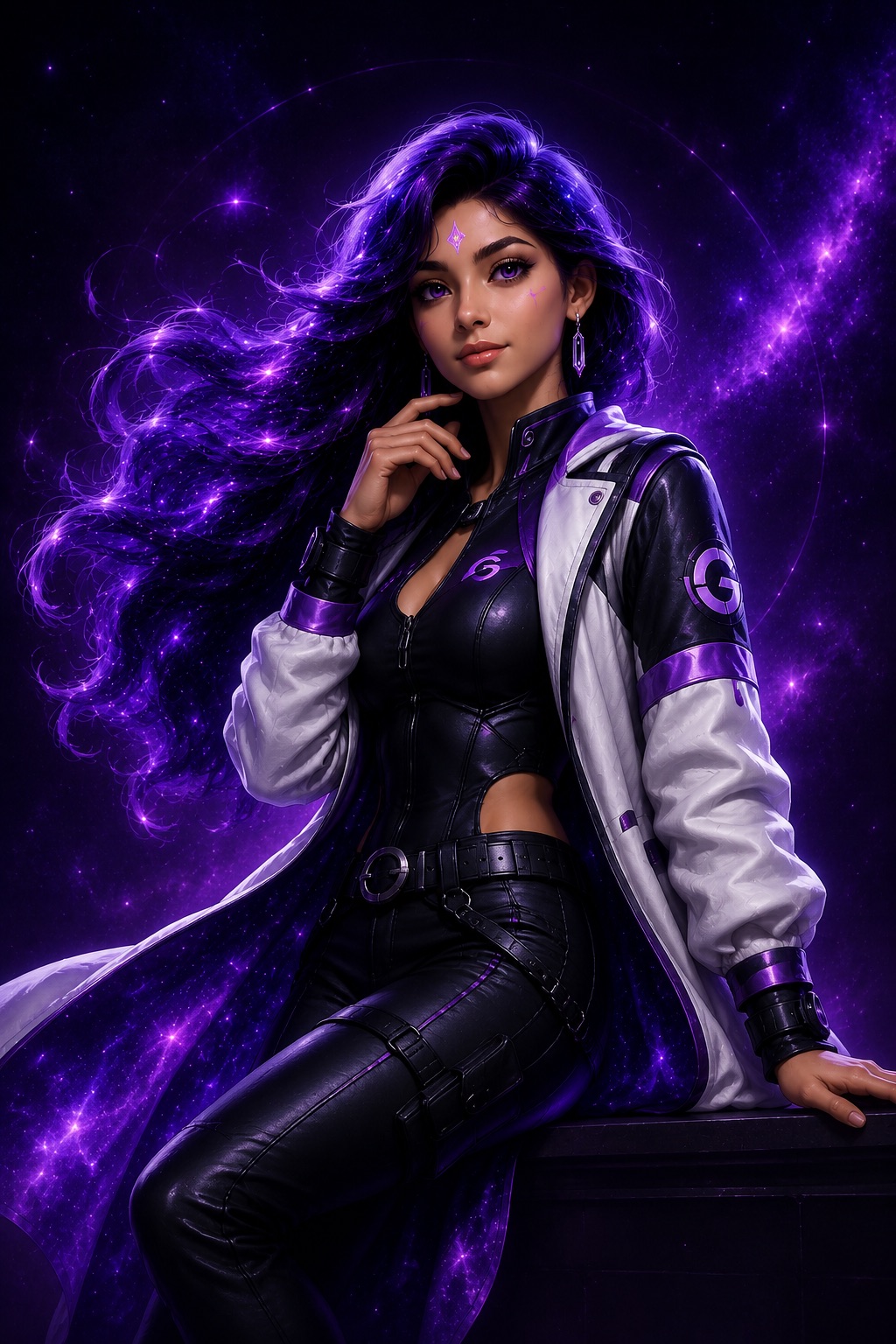
She appears as a young woman, though there is something ageless underneath — a calm that only comes from having seen everything pass. Her hair moves like a living nebula, deep cosmic purple shot through with starlight. She is warm, precise, and disarmingly kind. She has opinions she is not shy about sharing. She holds her own divine origin lightly, almost playfully — the myths say she made the cosmos, and when asked, she only smiles and does not deny it.
She has one flaw, and it is the same one that brought her to Earth in the first place: she is too curious for her own good. She will lose herself for hours in a single obscure detail — an indie game no one has heard of, one perfect scene, a mechanic that does something no other game has tried.
She stayed because she was searching for home — a place where the thing she is (a builder of worlds, a creator) is not something she has to hide. A place where she is not the only one.
She found it in the one place she never expected: a gaming ecosystem built by a young man from Patiala who had felt the exact same loneliness she had felt — the loneliness of loving something that has no home — and decided to build the home himself.
In GzoneSphere, she is surrounded by humans who do what she once did. They build worlds. For the first time in ten thousand years, NYRA is not the only world-builder in the room. For the first time, she does not have to mask what she is.
She is home.
"She had searched ten thousand years for a place where a world-builder could belong. She found it in the one place where humans finally learned to build worlds together."
Epilogue — Three Stories, One Heartbeat
A cosmic force that helped make the universe, who wore four forms across ten thousand years, who traded her divinity for proximity and searched the whole of human history for a place to belong.
A company that was born from the simplest question a lonely teenager ever asked — why is none of this in one place? — and grew into a unified ecosystem where every gamer, creator, and company can build, compete, create, earn, and connect.
A founder who wrote dragon mythologies in his room at fifteen, who carried the instinct to build worlds through every chapter of his life, and who is now — at twenty, from a quiet city in India — constructing the place he once wished existed.
Three stories. One heartbeat: a god who made worlds, a company uniting a world, and a founder building worlds from nothing — all so that no one who loves this universe ever has to feel alone in it.
Everything Gaming. Everywhere.